
Nighttime has a way of enlarging problems.
A bill that looked manageable at three in the afternoon can start to feel like a personal crisis at 11:30 p.m. A delayed freelance payment, an awkward conversation, a health concern, an unfinished task, or a broader struggle that has been sitting quietly in the background all day can suddenly move to the front of the line once the sun goes down. The facts may not have changed at all, but the feeling around them certainly has. I’ve experienced it more times than I can count.
The problem itself is often the same problem it was earlier in the day. The late payment is still late. The bills are still there while the uncertainty has not disappeared. The thing you wish you could fix immediately is still sitting there, just as unresolved as it was at lunchtime. And yet, at night, it takes on a different shape, feeling heavier. Darker. More permanent somehow.
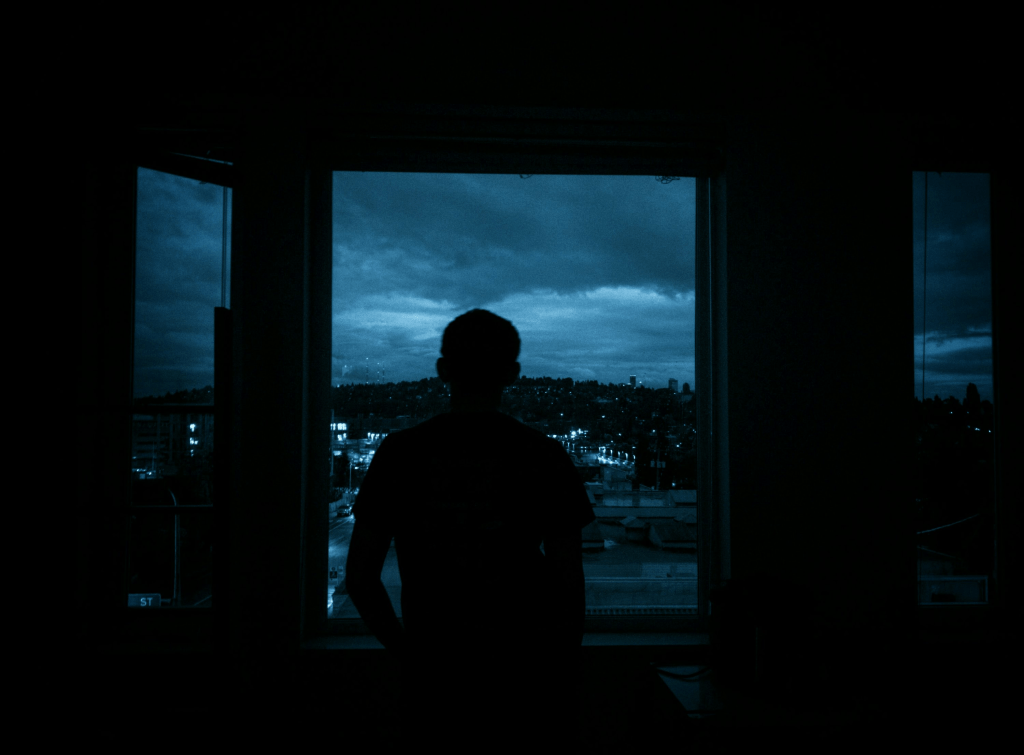
Even King David referred to what many bible translations call “disquieting thoughts,” and that phrase has always struck me as unusually accurate. Disquieting is exactly what they are. They are not always dramatic or catastrophic, just deeply unsettling in a way that seems to gather strength in the quiet hours.
During the day, life has structure. There are errands to run, work to do, emails to answer, meals to prepare, places to go, and conversations to have. Even if the problem remains unsolved, the day gives you things to do. Motion itself can be reassuring. It creates the feeling that life is still moving forward, that some response is possible, that the problem belongs to the larger flow of living.
At night, all of that changes.
The phone stops ringing. The errands are done or postponed. The inbox can wait until morning. The world grows quieter, and with that quiet comes space. Sometimes that space is peaceful. Other times it becomes the perfect breeding ground for anxious thoughts. The mind, no longer occupied by the practical tasks of the day, starts turning inward. It revisits and exaggerates things. It takes one unresolved issue and quietly builds an entire emotional weather system around it. It’s been said that the imagination makes things ten times worse than reality – and I firmly believe that.
Anyone who has ever lain in bed staring at the ceiling knows this feeling well. Something that could be thought about rationally at 2 p.m. suddenly feels loaded at midnight. The mind starts asking questions it cannot answer. What if this gets worse? What if the money doesn’t come? What if I never solve this? What if this is not just a rough patch but the shape of the rest of my life?
Those are nighttime questions.
They rarely arrive in broad daylight while you are buying groceries or working. They tend to show up when the house is quiet and the mind is tired enough to lose perspective but still active enough to keep generating scenarios.
I do think creative and analytical types may be especially prone to this. People who observe a lot, think a lot, remember a lot, and notice subtle patterns often have minds that don’t shut down easily. That same wiring can be a gift during the day. It can produce ideas, insights, solutions, writing, creativity, and depth. But at night, especially when there is no external distraction, that same mind can become a difficult roommate.
It starts making connections that may or may not be useful. It revisits old mistakes. It predicts future disappointments that probably won’t happen anyway. It drags in unrelated worries for backup. A late payment is no longer just a late payment. It becomes part of a larger story about instability, uncertainty, aging, missed opportunities, and all the things in life that don’t move on our preferred timetable.
And if you live alone, the effect can be even stronger.
There is no casual conversation in the next room. No one to break the spell. No one to say, “You know what? This feels worse because it’s late and you’re tired. Go to bed.” Solitude has its strengths, but it also gives your thoughts more uninterrupted runway than they sometimes deserve.
That’s why the next morning can feel so strangely different. The bills are still there. The freelance fee has not magically appeared overnight. The uncertainty may remain exactly where you left it. But something has shifted. Morning brings proportion back. Light and routine do that. So does the simple fact that the day offers options.
You can send an email or make a call. Rework a budget. Go for a long walk to break up the day. Tackle one small thing. Pray. Adjust. Endure. Manage.
In some cases, you can’t fix the whole problem. But you can often do something, and doing something changes your relationship to the problem. It no longer feels like a giant shadow sitting on your chest. It becomes a situation to address, manage, or outlast.
That may be the biggest difference between night and morning. At night, problems often feel absolute. In the morning, they become practical again.
I’m not saying nighttime anxiety is irrational in the sense that the underlying concerns are fake. Many of them are real. Life can be difficult, and some struggles do not disappear just because the sun comes up. But the mind at night is not always a reliable narrator. It has a tendency to present unresolved things as hopeless things, and those are not the same.
An unresolved problem may still have a path through it. A delayed answer may still arrive. A burden may still be carried better tomorrow than it feels tonight. What feels unbearable in the dark sometimes becomes manageable in the light, not because life suddenly turned easy, but because perspective returned.
Maybe that is why so many people say the same version of the same thing: “Things looked different in the morning.” They often do.
And that is worth remembering the next time the mind starts building mountains out of shadows at 11 o’clock at night. Sometimes the most honest thing you can say to yourself is this: yes, the problem is real, but this is nighttime talking. Morning may not erase it. But morning will often tell the truth about it more gently.

