
A song lyric started it. “Nothing but the dead and dying back in my little town…”
It’s a line from My Little Town by Simon & Garfunkel, and it’s one of those lines that sticks with you. Not because it’s cruel, but because it captures a feeling people recognize when they think about certain places.
I was reminded of it when someone mentioned that the lyric made them think of Binghamton, New York, where they spent their early years, a Rust Belt city that has struggled as industries faded and populations shifted elsewhere.
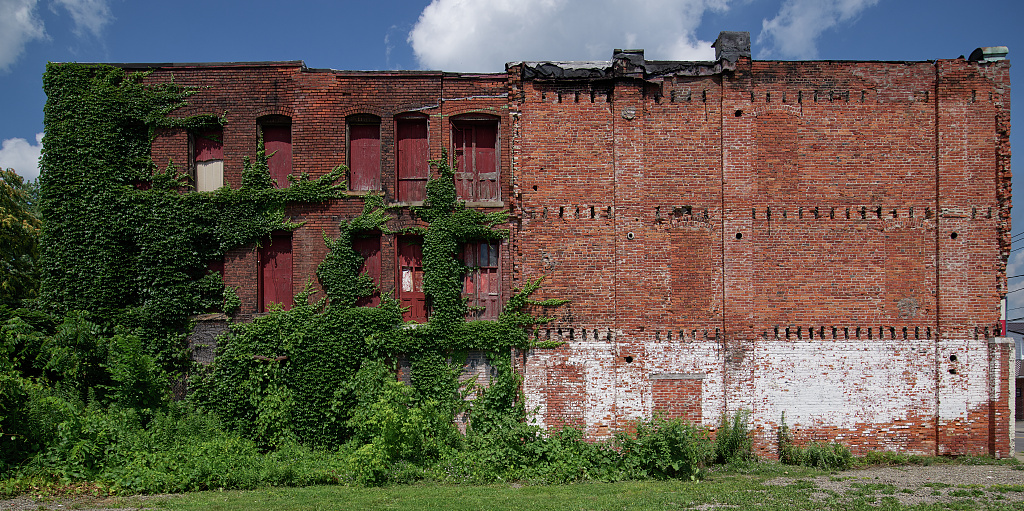
That comment stuck in my mind. Not long afterward, I found myself driving south toward Harrisburg, Pennsylvania (which, ironically, filed for bankruptcy in 2011) to watch a few Double-A baseball games. If you’re traveling a certain route, Binghamton sits almost directly along the way.
So I spent a day and a night there in Binghampton. And that’s when I realized something interesting: even though I’ve never lived in the Rust Belt and never grew up in a town that has seen better days, I’m oddly drawn to places like that.
Cities that are booming tend to hide their past. Old buildings disappear, replaced by new ones and strip malls. Streets are redeveloped and entire neighborhoods transform in the space of a decade. However, towns that have struggled economically often preserve their history almost by accident.
You walk down a street and see brick buildings that clearly date from another era. Some storefronts are still intact, even if the businesses that once occupied them are gone. Faded painted advertisements linger on the sides of buildings. It’s like walking through a place where time hasn’t been completely erased.
That’s what struck me in Binghamton. You could see the bones of a city that once had a strong industrial backbone. For decades, companies like IBM had deep roots there before economic changes reshaped the region.
The story of the city is still written into the architecture. When you stand in a place like that, your imagination starts doing something interesting. You begin picturing what it must have looked like decades earlier. You imagine workers leaving factories at the end of a shift. Busy sidewalks. Restaurants and diners filled at lunchtime and dinner. Storefronts with neon lights glowing in the evening.
The town might be quieter now, but the traces of that earlier life remain and your mind fills in the rest. That’s part of the strange pull these places have on me. They invite me to imagine the people who once built their lives there.
I had a similar experience visiting Wheeling, West Virginia (pictured below).
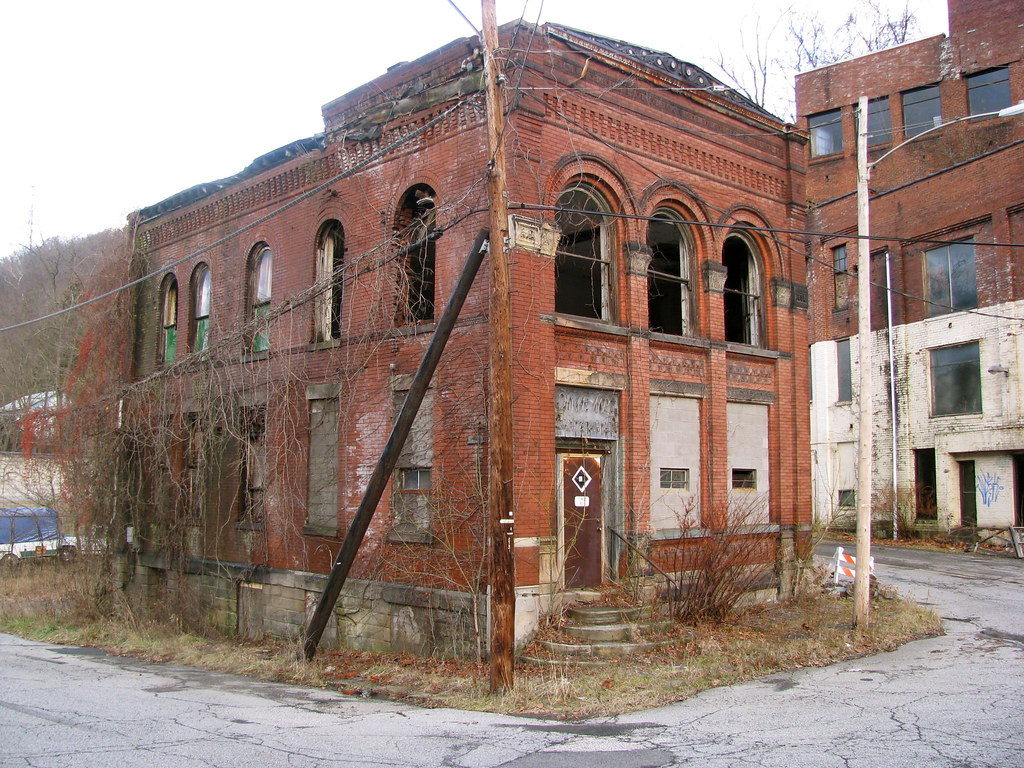
Driving through parts of Wheeling, you see a mix of beautiful old architecture and buildings that are clearly showing their age. Some structures are well-maintained. Others are weathered and slowly decaying. It creates a visual contrast that’s hard to ignore. You realize that the town once carried enormous economic energy. The Ohio River corridor was a hub of industry for generations.
Now the pace feels slow and different. And strangely compelling. One reaction I often have when visiting towns like these is a sudden desire to fix things. I start imagining what might revive the place: a large manufacturing plant or a massive distribution center. A company that brings thousands of jobs back to the region.
The modern equivalent might be something like a giant warehouse run by Amazon or a major automotive plant. I picture factories buzzing again and storefronts reopening.
But then reality steps in. The industrial economy that built many of these towns has changed dramatically. Globalization, automation, and shifting industries have reshaped the economic landscape in ways that are hard to reverse.
Even cities like Detroit, once synonymous with American manufacturing and the auto industry, have spent decades trying to reinvent themselves after enormous industrial decline. The old model of thousands of workers leaving a factory gate at the end of a shift is largely gone.
And yet, places like Binghamton and Wheeling still have something powerful. They have history and character. They have stories embedded in their streets and buildings. Abandoned theaters once hosted crowds. Every factory once supported families. Neighborhoods once carried the everyday rhythm of working people building lives.
Even when some buildings fade, that human story doesn’t disappear. I can still feel it and I think that’s what draws certain people to towns that have seen better days.
It isn’t decline that fascinates them and me. It’s the sense of accumulated life.
These places feel real in a way that newer, perfectly polished developments sometimes don’t. They remind us that communities are built over generations. That economies rise and fall. That people adapt and keep going.
Every town – even the ones that seem quiet today – was once someone’s little town. It was a place where people worked, raised families, and believed the future would continue unfolding there. When you walk through a place like that, you’re not just seeing buildings. You’re walking through the traces of thousands of lives. And for me, that can be strangely moving, even if I’ve never lived there myself.

