There’s a difference between someone who talks too much and someone who sets off alarms. The former drains you while the latter tightens something in your chest and has your Spidey-sense tingling.
A lady a few years older than me walked into the hangout mid-Friday afternoon. I was taking the afternoon off for the long weekend and she attached herself to the nearest available person – me – at the bar-like counter with a velocity that bypassed normal social sequencing. There was no easing in, just a deep dive on her part. Just questions. Immediate and personal.
At first, I tried to normalize it. Some people overshare, while some don’t read cues.
Then the questions shifted. “Do you live in town?” Fine. “What’s your address?” Not fine. “Do you live alone?” ?????
That’s when the air changed. There are questions that belong in a gradual conversation. There are questions that don’t belong anywhere near a stranger. When someone asks for your address within minutes of meeting you, it isn’t curiosity. It’s boundary collapse and even threatening. And as the questions escalated, so did the proximity. I was on the seat closest to the wall – one of those corner spots that feels comfortable until it doesn’t. She kept inching forward. Chair scraping as she moved one chair closer every few seconds. Suddenly, she was less than a foot away, deep in my personal space. With the wall behind me, there was nowhere to lean back without making it obvious.
Your nervous system does a quiet scan: exits, distance, obstacles. It calculates before your brain finishes forming sentences. I became aware of how little physical space I had left. It mattered. Her eyes moved differently, too. Not just eye contact. She was scanning, evaluating, and lingering too long. The conversation wasn’t reciprocal. It was an extraction and I told her to move a couple of seats away because I felt crowded (and uneasy). Even if she were the most gorgeous woman on earth, I would have told her to back it up.
When she asked my name, I instinctively gave her a false first name and no last name – but I had one prepared just in case. She left soon after, and even the staff commented on the strange encounter, saying she had creeped them out.
Later, I remembered reading that the average person unknowingly encounters a dozen or more murderers in their lifetime. Who knows if that number is even accurate. It doesn’t matter. The point isn’t that she was dangerous. The point is that statistically, not everyone who makes you uncomfortable is harmless.
About a year after I was downsized – still deep in the heart of COVID, with lockdowns and stay-at-home orders unless necessary – I took a job delivering refurbished goods to surplus stores. Sales and delivery. Boxes in the back of a truck. Routes. Invoices. Inventory.
On paper, it was practical. Income is income. Pride doesn’t pay the bills, and the whole world was in a prolonged slowdown, which may have come at a good time because I noticed how burned out I was. Within two days, however, something in me felt off.
I remember driving between stops thinking, What am I doing? Not in a snobbish way. Not in a “this is beneath me” way. In a disoriented way. For years, I had introduced myself as a writer. A communications professional and a storyteller. My work identity was built around words, ideas, deadlines, research projects, interviews, and bylines. Even when freelance life was unstable, the core identity held.
Now I was hauling refurbished merchandise into the back rooms of surplus stores. And it felt like the end of something. It didn’t help that the boss was abusive and volatile – the kind of personality that quickly erodes confidence. But the real issue wasn’t him. It was the internal narrative that had quietly taken hold: Maybe this is it now. Maybe the writing career is over, and I’d better accept it.
That thought is heavier in your fifties than it is at 30. At 30, you assume there’s another act. In your fifties, you start wondering about a lot of things.
Within three days, I quit. From the outside, it might look impulsive. Financially risky – even with plenty of my downsizing package nicely tucked away and a government program that paid out a monthly amount to keep everyone going who was downsized because of COVID.
What I now recognize is that I wasn’t quitting a job. I was fighting for an identity.
When you’ve built most of your adult life around a skill, a role, a profession – it isn’t just income. It’s how you locate yourself in the world. It’s how you measure worth. It’s how you answer the question, “What do you do?” Take that away, and something destabilizes.
That’s the quiet midlife crisis nobody prepares you for: The identity vacuum.
You wake up one day and realize the label you’ve worn for 30 years has been peeled off. You’re standing there with experience, memory, and muscle memory, but no clear category.
Who are you when the title disappears? Some people cling to the old version and pretend nothing changed. Some settle into whatever pays the bills and quietly shrink, while others go through something uglier – an ego death.
You have to separate who you are from what you did. And that is easier said than done. For me, quitting that job wasn’t about pride. It was about refusing to internalize the idea that the writer was gone. The times were uncertain, and no one knew how long the COVID crisis would last. The pandemic had scrambled everything.
But the identity wasn’t dead. It was bruised, though. There’s a difference. A lot of people in the 55–65 range are going through this, whether they admit it or not. Careers peak and fade. Industries shrink, and companies downsize. Our bodies age. Relevance shifts.
And underneath it all is the same question: If I’m not that anymore… what am I?
The rebuild isn’t about income first. It’s about identity reconstruction. And sometimes, you have to walk away from something quickly – even something practical because staying would confirm a story about yourself that isn’t true. The collapse wasn’t the job; it was believing I was finished. That turned out to be untrue.
There’s a particular kind of guilt that showed with me around three in the afternoon. It slides into my brain and asks, quietly, “What have you accomplished lately?” And I can feel the low flame of my brain flickering instead of roaring.
For years, I would have fought this hour. I would have forced something. Another paragraph, blog entry, or another idea squeezed out like the last bit of toothpaste from a nearly empty tube. Somewhere along the way, I absorbed the idea that every hour must justify itself, because the clock is a scoreboard and I must keep scoring points every minute until 5 p.m., or later, five days a week. But there’s something humbling about an afternoon that simply refuses to cooperate.
I’ve written about this before, but we live in a culture that treats productivity like oxygen. If you’re not producing, optimizing, building, growing, or improving, you must be slipping. Rest feels suspicious and stillness feels lazy. An unremarkable hour feels like a missed opportunity.
But what if it’s not? What if it’s just an hour?
There’s something quietly liberating about watching the minutes move and realizing that nothing dramatic needs to happen. The world does not tilt because you didn’t maximize 2:47 p.m. The sun doesn’t dim because you paused. The inbox doesn’t explode because you let your mind idle for twenty minutes or even an hour.
Sometimes, the most productive thing an hour can do is pass.
As I sit in this coffee shop working, I look around and notice something: not everyone here is racing toward something. The older man by the window is stirring his coffee long after the sugar has dissolved and staring out at the lake. The couple in the corner isn’t negotiating contracts; they’re talking about what to make for dinner. The woman near the door scrolls slowly, unhurried, occasionally smiling at something unseen.
No one looks like they’re trying to win the day. And yet the day continues. Maybe that’s part of small-town life. I knew several people here already when I moved – they live near one of the other lakes, within a short drive of here. And I’ve gotten to know many more here. What I’ve heard is that most of them escaped the rat race of big city life. They work, but either remotely or by starting a business they enjoy that pays the bills. No one seems to be in a hurry here.
I used to believe that momentum had to be constant or it would disappear. That if I let up, even slightly, everything I was building would unravel. But that belief is exhausting. It turns afternoons into adversaries and life into a checklist.
Some hours are for deep work, and some are for progress and maybe a breakthrough or two. A good chunk of my work is research and interpretation of that research is something I bill for. I have an insatiable thirst for knowledge and understanding, so, like my writing – which I love – research doesn’t feel like work.
Yet, there’s a dignity in allowing a low-energy hour to exist without punishment. It doesn’t mean ambition has vanished or that discipline has eroded. It just means the human machine isn’t designed to run at full throttle without consequence.
Even athletes have recovery days and seasons have winter. The slow acceptance that not every hour has to be productive doesn’t arrive all at once. It seeps in gradually, like afternoon light shifting across the floor. You stop fighting it. You stop narrating it as a failure. You let the lull be what it is – a lull. And maybe that is where I have changed over the last several months. And, after all, at my age, isn’t this what I wanted? A slower pace.
Not squeezing real or perceived value from every second, but understanding that life is not a factory line. It’s ebb and flow. It’s sprints and pauses. Sure, the clock keeps moving no matter what you do but I’ve learned that sitting still is not losing or time that has to be made up.
Continuing my occasional travel memory blog entries: Thurmond, West Virginia, felt like walking into a paused sentence. The buildings still stand in a straight line along the railroad tracks, their wooden facades facing forward as if waiting for something. But the motion that once defined the town is gone. Its population is five people. Yes, five.
At its peak in the early 1900s, Thurmond was a thriving coal town along the Chesapeake & Ohio Railway. Coal moved through here by the ton. Money moved through here, too. Hotels, banks, storefronts, and boarding houses – they weren’t decorative or nostalgic. They were necessary. Men in work boots filled the streets and the saloons were loud. The depot was busy. Now the streets are quiet enough that you can hear your own footsteps.
The depot still sits beside the tracks, dignified and simple. The rails remain active, which makes the stillness even stranger. A freight train can thunder through without stopping, shaking the ground and rattling the windows before disappearing into the gorge as quickly as it arrived. For a few seconds, the town feels alive again – then the sound fades, and the silence returns even heavier than before.
I stood on the wooden boardwalk and tried to picture it full: coal dust in the air, steam rising from locomotives, the scrape of boots on planks, the murmur of transactions and gossip. It’s hard to reconcile that image with what’s there now: faded paint, sagging porches, darkened windows that reflect only sky and trees.
Weeds push up through cracks and moss creeps along foundations. Trees lean in from the hillside. The forest inches forward quietly, season by season, reclaiming ground that industry once cleared with urgency and confidence.
What struck me most wasn’t the decay itself. It was the ordinariness of what once existed here. These weren’t grand mansions or architectural landmarks. They were functional buildings tied to paychecks and groceries, and to ordinary afternoons when the breadwinner deposited earnings at that bank, someone waited for a train with a suitcase and nervous hope, a clerk stood behind a counter selling supplies to miners coming off a shift, and a family raised children within sight of those tracks.
Where did they go when coal production slowed and the economics shifted? When the railroad no longer needed a town here? Did they move to Charleston? To Ohio? Did their grandchildren scatter across the country, carrying only a faint story about a place called Thurmond that had once mattered?
There’s a specific kind of sadness in industrial towns that fade and it fascinates me. It isn’t an explosive tragedy. It’s erosion. The slow realization that the backbone of a community – the mine, the mill, the factory – is not eternal. When the work leaves, the people follow. What remains are shells that once held daily life.
And yet there is something quietly respectful about Thurmond’s current state. It hasn’t been bulldozed into parking lots. It’s a designated national historic district.
I found myself imagining the interior rooms and sunlight cutting through dust, floorboards creaking under boots, ledger books filled with careful handwriting. The human details are what linger in your mind, not the peeling paint.
A town like Thurmond forces you to confront impermanence. Industries feel permanent when they dominate a landscape. Coal shaped West Virginia for generations. Railroads carved through mountains and seemed unstoppable. But permanence often turns out to be just a long season. The trains still pass through Thurmond. You can hear them coming from miles away. They roar across the tracks and vanish into the hills without slowing. The town remains standing, but it is no longer a destination. It is something trains move past.
Driving away, I kept thinking about the people who must have believed this place would last forever. They built homes here and opened businesses. They could not have imagined visitors decades later walking quietly down their street, wondering about them.
Continuing my travel journal: Not far from Money, Mississippi – just a short drive across the same flat Delta landscape – I found myself chasing a very different ghost.
Where Money carries the weight of documented history, the Delta’s crossroads carry myth. Somewhere near the intersection of Highways 61 and 49 in Clarksdale, Mississippi, the story goes, Robert Johnson met the devil and traded his soul for brilliance on the guitar.
I arrived expecting something cinematic. What I found was an ordinary intersection with asphalt, traffic lights, and passing cars. Nothing theatrical. In a sense, it was just another crossing of two roads under an enormous Mississippi sky. And yet the ordinariness is what unsettles you.
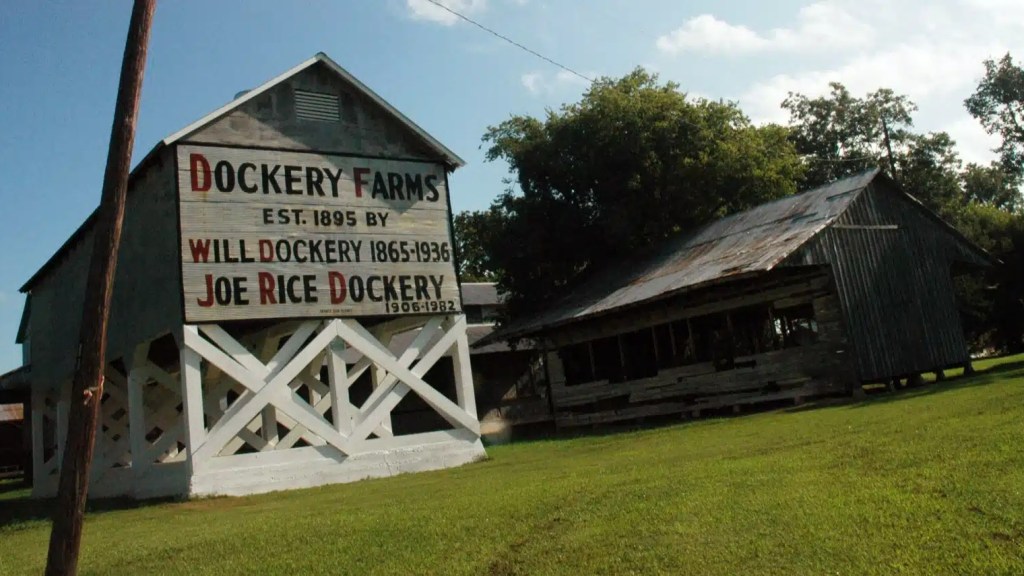
Because this isn’t the only place that claims the legend. Some insist the real crossroads lies near Highways 1 and 8 in Rosedale, Mississippi. Others point toward Dockery Farms, Mississippi, near Cleveland – often called the birthplace of Delta blues – suggesting the story belongs less to a traffic signal and more to the soil itself. There are even whispers of other intersections scattered across the Delta.
Four possible crossroads. Which somehow makes the myth feel stronger, not weaker.
I drove toward Dockery Farms on a long, nearly empty stretch of highway. The fields flanked both sides of the road, flat and open, with nothing to interrupt the horizon. The sky felt oversized, pressing down in a way that was more atmospheric than physical. There were moments when I realized I hadn’t seen another car for miles.
That kind of emptiness does something to your imagination – and not always in a good way. The drive toward Highways 1 and 8 near Rosedale felt similar – quiet, slow, almost ominous in its stillness. No dramatic buildup. No soundtrack. Just wind brushing over farmland and the hum of tires on pavement. If someone had stepped out of the tree line at dusk, it wouldn’t have felt impossible.
Standing at one of those intersections, I couldn’t help thinking of the movie Crossroads – that quiet, chilling moment when the devil appears out of nowhere and says, “Been a long time, hasn’t it Willie. Yes, sir, been a long time.” There’s no lightning or fire. Just a calm, measured voice under an open sky.
In the Delta, that kind of arrival doesn’t feel far-fetched.
The land is so open, so stripped of distraction, that something supernatural almost feels plausible. Crossroads in folklore have always symbolized choice, destiny, and encounters with forces beyond understanding. In this geography, the symbolism feels amplified. The roads stretch straight and flat in every direction. Nothing hides and yet everything feels layered.
Whether Robert Johnson ever stood at any one of these exact intersections is almost beside the point. The transformation in his music was real. The myth grew because people needed an explanation that matched the sound – something grand enough, dark enough, mysterious enough.
The Delta doesn’t resist that explanation. It almost invites it.
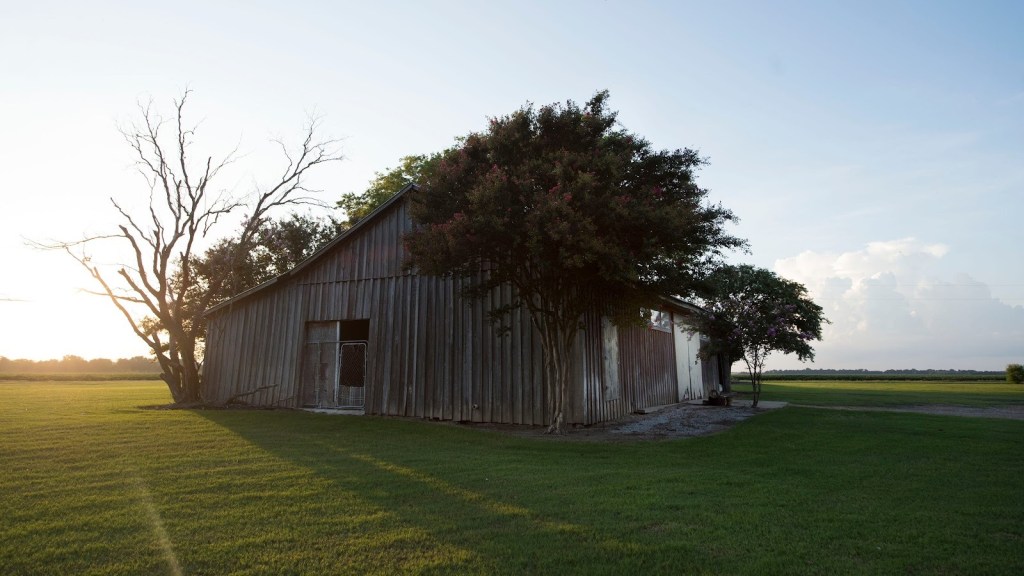
Just miles from where documented injustice unfolded in Money and near the site of the barn where unimaginable cruelty occurred, another story took root – one about talent, sacrifice, and the price of genius. Fact and folklore live side by side here without contradiction. Sorrow and song share the same soil.
I lingered longer than I expected at each of the crossroads and even thought of going back to the isolated ones well after dark, but figured I would probably creep myself out as my imagination ran wild. Nothing supernatural happened but my imagination sure was jumping during those daylight visits – especially at the quieter ones. And maybe that was exactly right. Legends don’t perform on cue. They hover quietly, waiting for someone willing to stand still long enough to feel them.
Driving away and back to my hotel, I realized the multiple claimed crossroads don’t dilute the story – they spread it. The legend isn’t pinned to one corner of asphalt. It drifts across farmland, highways, and memory. It belongs to the atmosphere more than the coordinates.
Mississippi doesn’t curate its stories neatly. It lets them breathe and haunt.
And somewhere between Money, Dockery Farms, Rosedale, and Clarksdale – between injustice and imagination – the Delta quietly reminds you that its past doesn’t sit politely in museums.
Some places one visits hum with energy and life. Others feel as though they breathe through memory alone.
I had read about the town for years because of the tragic story of Emmett Till, but reading about history and standing inside it are two entirely different experiences. Driving toward Money several years ago felt less like a simple travel stop and more like crossing an invisible line between present and past. The closer I got, the quieter everything became.
The Mississippi Delta opened into wide, flat farmland that stretched endlessly in every direction, giving the unsettling impression that time had slowed or perhaps stalled altogether. The isolation struck me immediately. Money didn’t just feel rural – it felt hidden, as if the land itself had decided to keep its stories protected behind miles of open fields and silent roads.
I remember tightening my grip on the steering wheel as I approached the infamous location. There was tension building in my chest and gut, an uneasy awareness that I was about to step into a place tied to one of the most painful and defining moments in American history. It wasn’t fear, but it wasn’t comfort either. It felt like walking toward a memory that still carried weight, still carried sorrow, and still carried consequences that had never fully settled.
When I arrived at what remains of Bryant’s Grocery and Meat Market, the emotional atmosphere shifted even further.
Calling it a building feels almost misleading. What stood there resembled a fragile skeleton of wood, brick, and memory – weathered by decades of heat, storms, and time slowly reclaiming what once stood intact. The structure was quietly surrendering to nature, while other parts seem stubbornly determined to remain, as if history itself refuses to allow complete disappearance.
I parked and stepped out of the car, and the stillness was immediate and overwhelming. There were no crowds or tour buses. No commercialization attempts to package tragedy into something digestible. Just wind brushing across the fields and the faint rustling of grass and leaves. The silence felt sacred, but it also felt heavy in a way that settled deep in my chest. Curiously, I felt like I was doing something wrong and that if a local saw me, they would tell me to leave and to let the history die.
Standing there, it was impossible not to think about the events that unfolded after Till, a fourteen-year-old visiting from Chicago, walked into that store in 1955. His murder would become a catalyst for the Civil Rights Movement, but standing on that ground stripped away historical summaries and timelines. It became intensely human. It became about a young life cut short, about grief that spread across a family and eventually across a nation, and about the uncomfortable reality that some wounds never truly close – or can’t close.
Some thirty miles away, I drove toward another site connected to the tragedy – the location of the barn in Drew where Till was brutally beaten and tortured before his murder. The drive there felt even heavier. The farmland stretched in the same quiet way, but now each passing mile felt like traveling deeper into a story that grows darker the closer you get to its center.
When I reached the barn, the stillness felt different from the store. The site didn’t just carry history – it carried a sense of unbearable weight, and I felt a pit in my stomach. And yes, tears came to my eyes. It was one of the rare moments in travel where curiosity disappears completely and is replaced by reflection.
Returning slowly toward Money, I couldn’t shake the feeling that the land itself carried memory. It felt as though stepping onto that soil stirred echoes that had never completely faded – voices, fear, anger, heartbreak. There was a lingering awareness that for some, this history might feel like something better left unspoken, buried beneath generations of silence and discomfort.
While I stood near the store the first time, another car had slowly pulled into the gravel nearby. A couple stepped out, looking around with the same cautious curiosity I had felt before. We didn’t speak beyond a brief nod, but the acknowledgement brought unexpected comfort. There was reassurance in knowing I wasn’t alone in trying to understand, remember, and pay quiet respect to a place that carries such immense historical weight. It felt like a shared moment of witnessing, even without conversation.
Leaving Money felt far different from arriving. The tension I carried into the town didn’t disappear, but it softened into reflection. The fields and empty roads looked exactly the same as they had when I arrived, yet something inside me had shifted. I realized that some places are not meant to entertain or inspire in the traditional sense. Some places exist to confront you with truth – raw, uncomfortable, and necessary.
As I drove away, I found myself glancing back through the rearview mirror longer than usual, as if part of me wasn’t ready to let the place disappear behind the horizon. There was a quiet realization that visiting historical sites is not simply about learning facts or checking landmarks off a travel list. It is about standing in spaces where human pain once unfolded and allowing yourself to feel its weight without distraction or denial.
Money is barely a blip on a map and not a place that welcomes you with fanfare. Instead, it offers silence – and in that silence, it asks something of you. It asks you to reflect. It asks you to acknowledge that the past is never truly past, especially in places where injustice once walked openly under the same sky.
Long after the place disappeared from view, the stillness followed me. I realized that the ghosts I had quietly feared awakening were never confined to that small patch of Mississippi Delta land. They travel with anyone willing to listen. They linger in thoughts, in questions, and in the quiet moments when history stops feeling distant and starts feeling painfully personal.
And as miles stretched between Money and me, I understood something I hadn’t expected when I began that drive: some places do not want to be visited for closure. Some places exist so that closure never fully arrives – because remembering, however uncomfortable, may be the only way history continues to speak, and the only way we continue to listen.
There’s a certain unspoken contract when you’re a regular at a hangout. You show up. You’re polite, and you tip well. You don’t ask for favors but it’s nice when someone goes out of their way for you because you are a regular. You don’t make anyone’s job harder than it needs to be. You sit quietly with your coffee, maybe a notebook and a phone, maybe just your thoughts. You blend into the background like a piece of furniture that happens to order refills.
Which is why it always catches me off guard when a server wanders over and treats me like the human version of Google, Shazam, Spotify Premium, and a universal remote rolled into one. “Who is this?” “What song is this?” “Can you Shazam it?”
Let’s pause right there.
First of all, I’m sitting here quietly having a coffee. I’m not DJ’ing. I’m not curating the playlist and I didn’t ask for a pop quiz. I’m not leaning back in my chair nodding along like some kind of resident music expert. I’m just sitting here with my thoughts and jotting down a few things.
Second, it’s not even busy. Which means you absolutely have time to do what you’re asking me to do. You have a phone. You have Shazam. In fact, I’m confident your phone can handle identifying a three-minute song playing through ceiling speakers.
Third – and this is where expectations really need to be managed – I don’t know who 90 percent of the artists are who made it big in the last 25 years. I missed the boat. It sailed without me. Yes, I have heard of Taylor Swift, Bruno Mars, and Jelly Roll, but I’ve never listened to a full song by any of them. Somewhere between the late ’90s and the streaming era, popular music became a parallel universe I visit accidentally while waiting for a refill. If the song came out after flip phones died, there’s a strong chance I’ve never heard of the artist, and an even stronger chance I don’t care enough to find out.
So when you ask, “Who is this?” and I shrug, that’s not me being mysterious. That’s me being honest. Then there’s the follow-up request. “Can you skip the ads?” No, I cannot.
For one thing, skipping ads is literally part of the job description. That’s like asking a customer to run food or bus a table because the place is busy. Also, I’m not paying attention. I’ve tuned the music out entirely. It exists as ambient noise: like clinking mugs or the espresso machine hissing in the background.
And even if I were paying attention, I have no idea how your setup works. There are four remotes sitting there. Four.
Each one looks like it controls either the TV, the sound system, the satellite feed, or possibly a time machine. I don’t know which is which. I don’t know which one skips ads, which one changes inputs, or which one accidentally shuts everything off and requires a manager override. Yet somehow, I’m expected to know.
This is where the universal remote conversation needs to happen. Preferably before involving me. Because once you ask me to fix the music, identify the song, skip the ads, and troubleshoot the electronics, we’ve crossed a line. I’ve gone from “regular customer” to “unpaid consultant.” And I did not bring my consulting rates with me today and you probably couldn’t afford them anyway.
There’s also something subtly exhausting about being asked questions you didn’t volunteer to answer. It breaks the bubble. The whole point of sitting alone in a familiar place is the invisibility. The comfort of not being “on.” When you ask me to Shazam something, I’m suddenly responsible for your curiosity, your boredom, and your lack of initiative. And I don’t want that responsibility. I just want my coffee.
So here’s a gentle, unspoken rule suggestion: if you’re working, and you’re curious about the music, use the tools already in your pocket. If there are ads, skip them yourself. If the remotes are confusing, that’s a system problem, not a customer problem.
And if you see a regular sitting quietly, staring into space, maybe let them stay in their zone until they need a refill. They didn’t come in to be tech support. They came in to disappear for a while.
Somewhere along the way, we quietly rewrote the rules of availability. I’m talking about outside of work, though, in a way, it can apply to work.
Not in a meeting. Not in a handbook. Not even in a conversation anyone remembers agreeing to. It just sort of happened. If you have a phone, you’re reachable. If you’re reachable, you’re expected to respond. And if you don’t respond quickly enough, something must be wrong. Or worse – what is your problem?
What I can’t seem to find, though, is the rulebook that says I’m required to respond according to your timetable. Yes, there’s a loose modern etiquette that suggests responding to a text within an hour is “polite.” Fine. I get that. But when did etiquette become a one-way street? When did courtesy stop including the basic awareness that other people have lives that don’t revolve around your needs, curiosities, or boredom?
Because that part seems to have quietly disappeared. I grew up learning how to do things for myself. If I needed information, I looked it up. If I had a small problem, I solved it. Asking for help wasn’t forbidden, but it wasn’t the default setting either. It was something you did when it actually mattered – not because it was convenient.
Today, the threshold for interruption is astonishingly low. Asking for song titles, or just three random texts in quick succession that essentially say nothing: all of it delivered with the assumption that I’m on standby and checking my phone every four minutes. You can’t remember the title of a song but remember a few lyrics? Type those into a search and the song title will pop up.
Once, after someone bombarded me with texts for the fifth day in a row about nothing, and then wondered why I wasn’t replying, I finally answered with what felt like a mild explosion: “Did it occur to you I turned my phone off because I was on vacation and didn’t want to be disturbed?” Harsh? Maybe. But this was a relative who was clingy – or was it disturbed and regularly wanting to know my whereabouts even though they lived a long way away. Goodness, we were fine not communicating for months before communication technology became ubiquitous.
The idea that turning your phone off requires justification is a relatively new and deeply strange development. Silence used to mean someone was busy, unavailable, or simply not home. Now it’s treated like a social malfunction. An unanswered text triggers concern, irritation, or passive-aggressive follow-ups – not because the message was urgent, but because access was assumed. And that’s the real issue: assumed access. Having the ability to reach someone does not entitle you to their attention. Being reachable does not mean being available. Yet many people now behave as if those distinctions don’t exist.
What’s especially exhausting is how quickly availability turns into expectation. If you respond a few times promptly, that becomes the new baseline. Any deviation from it feels, to the other person, like a slight – even though nothing was promised in the first place. It’s not malicious most of the time. It’s just thoughtless. People send messages when they have a moment, without stopping to consider whether the person on the other end might not. And when there’s a delay, the focus isn’t on respecting that person’s time – it’s on their own unmet expectation.
This mindset shows up everywhere: friends, family, etc. The medium changes, but the assumption stays the same. If you don’t respond quickly, you’re unreliable and difficult. Unavailable in a way that needs explaining. But availability is not a moral virtue. Being constantly reachable doesn’t make you considerate. It makes you interruptible. And while responsiveness is useful in certain contexts – emergencies, time-sensitive work – most of what pings our phones doesn’t fall into that category.
A text is not a summons or an obligation. Silence is not disrespect.
If anything, there’s an etiquette we rarely talk about anymore: the courtesy of not assuming immediate access to someone else’s life. The courtesy of understanding that your message enters someone else’s day, not the other way around.
Turning your phone off for a few hours or days (on vacation, for example) shouldn’t be an act of rebellion. It should be normal. So should delayed replies. So should the understanding that people have boundaries – even quiet ones they don’t announce. I’m not advocating for disappearing entirely or ignoring people indefinitely. I’m advocating for balance. For a return to the idea that communication is mutual, not on-demand.
Because the real question isn’t why didn’t you respond sooner? It’s this: When did we decide that everyone else’s time belonged to us just because we could reach them?
Until we answer that, the pressure to always be “on” will keep growing – and the simple act of living uninterrupted will keep feeling like something we need to apologize for.
As noted in my previous entry, winter has a way of slowly dimming the room without telling you it touched the switch. It’s not enough to make you think something is wrong. Just enough that everything feels a little flatter, a little heavier, a little slower. You’re still functioning. You’re still getting things done. But the internal engine isn’t quite revving the way it does when the days are long, and the light is generous.
Working from home makes that dimming easier to miss. There’s no commute to mark the start of the day. No office energy, no movement, no social friction to spark momentum. One day can look exactly like the one before it. The world outside is frozen and quiet, and if you’re not careful, something inside starts to mirror it. That’s where the old-fashioned “up and at ’em” mentality quietly earns its keep.
Not in a boot-camp, grind-yourself-into-dust way. Not in a hustle culture way that expects you to do 58 things before noon. But in a simple, biological, nervous-system way. The kind of routine that tells your brain and body: the day has officially started. We’re not drifting or hovering. We’re on the on-ramp with our foot on the accelerator.
There’s something powerful about early, physical signals of intention. Getting up at a consistent time. Letting light into the room, even if it’s winter light. Moving your body a little. Running warm water as you shave, and then shower. Changing clothes. Doing the small rituals that separate “sleep mode” from “engaged mode.” These aren’t cosmetic acts. They’re neurological cues.
In summer, the environment does that work for you. Sunlight floods the room. Birds are loud. People are moving. There’s noise, color, and activity. Your system wakes up almost automatically. In January, the environment is subdued. The light is low. The landscape is monochrome. Sound is muffled by snow. The world is in energy-saving mode, and your body takes the hint. So you have to provide your own ignition.
An “up and at ’em” routine is less about discipline and more about re-establishing contrast. It creates a line between night and day, rest and action, interior and exterior, passive and engaged. Without that line, everything blends. You’re technically awake, but not fully switched on.
The interesting thing is how much of mood follows motion. Not the other way around. We tend to think we need to feel motivated to act, when in reality, action often generates the feeling. Warm water wakes the senses. Standing upright changes breathing. Light hitting your eyes affects your circadian rhythm. Simple grooming and movement remind the brain that you’re a participant, not an observer.
It’s a form of self-respect, but also of self-regulation. Winter nudges you toward conservation. Toward stillness. Toward curling inward. There’s nothing wrong with that in small doses. Rest is necessary. Reflection is healthy. Quiet can be restorative. The trouble comes when rest quietly becomes inertia, and stillness turns into a low-grade emotional fog. The line between the two is thin, and routine is often what draws it.
When you make a point of “starting the day” instead of sliding into it, you change the tone of the hours that follow. You’re less likely to drift or feel vaguely unmoored. You are more likely to experience the day as something you’re entering, not enduring.
It’s not about perfection and it’s not about rigid schedules or punishing yourself for off days. It’s about rhythm. About giving your system consistent cues that say, this is morning, this is movement, this is engagement, this is life happening now.
There’s also an identity component. When winter and isolation quietly reduce your world to a single room and a single screen, it’s easy to feel smaller, less visible, less defined. Small daily rituals restore a sense of form. They remind you that you are still a person moving through time, not just a mind floating between emails and paragraphs.
In that sense, the “up and at ’em” mentality isn’t about productivity at all. It’s about presence. It’s a way of turning the lights back on, not by waiting for the sun to do it for you, but by flipping a few internal switches yourself. A way of telling the season: you can slow the world down, but you don’t get to put me in standby mode.
Winter will always dim the room a little because that is its nature. The goal isn’t to fight it. It’s to make sure you’re still awake enough to notice when the light returns.
January has a way of turning life’s dimmer switch down without asking permission. Not off. Not dark. Just… lower.
That’s the best way I can describe winter when you live in quiet cottage country and work from home. The days aren’t dramatic enough to feel like a crisis, but they’re heavy enough to feel different. Two weeks of gray followed by two weeks of blinding sun, paired with wind and cold that slices through your jacket and makes you question why you ever left the house and why you continue to live in a beautiful place that, unfortunately, has brutal winters. January has snow that looks beautiful and feels suffocating. Silence that’s peaceful until it starts to echo. And, let’s face it, everything is white or gray with all but the evergreens leafless and dormant.
It isn’t sadness, exactly. It’s more like low voltage.
You wake up, the day is technically there, but it doesn’t fully arrive. The light is muted. The sounds are softer. Time stretches. Motivation doesn’t disappear; it just loses urgency. You still work, still write, still think – but everything feels one notch slower, one notch heavier, one notch less animated.
Working from home amplifies it. When there’s no commute, no office buzz, no small talk, no external markers saying “the day has started,” the hours blur together. Morning can slide into afternoon without you noticing. You realize at some point that you’ve been sitting in the same spot for far too long, staring at the same screen, the same walls, the same winter light that never quite brightens.
In summer, the world pulls you outward. There’s movement, noise, people, boats, traffic, laughter, patios, errands that feel like mini-adventures. In January, the world pulls inward. Roads are quiet and the lakes are frozen. Small towns tend to hibernate. You do too, without realizing it.
What makes it tricky is that it doesn’t feel like depression in the way people imagine depression. There’s no constant sadness, no dramatic despair. It’s more like emotional insulation where you don’t feel terrible, you just don’t feel fully on. The spark is dulled. The edges are softened. The days lose contrast.
I noticed it recently in small ways. A strange emotional flatness on overcast days. A subtle lift when the sun finally shows up, as if someone secretly adjusted the lighting in the room of my brain. The realization that lying around too long doesn’t feel restful anymore – it feels like sinking into the couch, into the day, into a fog where time passes without texture.
There’s a difference between rest and stagnation, and winter blurs that line. Rest has intention, and it restores. Stagnation is what happens when motion quietly stops and no one announces it.
The hardest part is that nothing is “wrong” enough to demand fixing. You’re functioning and meeting deadlines. You’re answering emails. You’re making coffee, making meals, paying bills, getting through the day. From the outside, everything looks fine. From the inside, it just feels… muted. Like life is being played through a layer of thick glass.
And yet, on the days when the sun breaks through, the difference is immediate and undeniable. Energy rises while thoughts feel clearer. Even simple tasks feel lighter. You’re reminded that the system still works – it’s just been starved of light and stimulation. That’s when it becomes obvious: winter doesn’t usually knock you down. It slowly turns the volume down and waits to see if you notice.
Working from home removes many of the natural “reset points” that keep days distinct. No walking into a building. No seeing different faces. No change of scenery unless you force it. The same room becomes an office, a lunchroom, a break room, and an evening space. Without boundaries, time loses its shape.
So you have to create your own signals. Your own markers that say, “The day is starting now.” A walk, even in the cold. A change of clothes. Music instead of silence. A deliberate decision to sit somewhere different, to open the blinds, to step outside and let the winter air shock your system awake. It’s not about fighting winter. It’s about not letting it quietly put you into emotional low-power mode.
January doesn’t scream. It whispers. It nudges you toward stillness, toward sameness, toward the idea that tomorrow will look exactly like today, so why rush? And if you’re not careful, you start to live as if time itself is on pause. But it isn’t. The days are moving. The light is slowly returning. The season will shift, whether you notice or not.
The challenge, especially when you’re alone with your thoughts and your screen, is to stay engaged enough to feel the movement – to remind yourself that you’re not stuck, just temporarily dimmed. And the solution? Remind yourself that you made it through another one. Keep busy, keep engaged, keep positive, and keep planning for next winter when you hope to be down south for five months – or maybe permanently.

 johnberkovich.com