
Some places one visits hum with energy and life. Others feel as though they breathe through memory alone.
I had read about the town for years because of the tragic story of Emmett Till, but reading about history and standing inside it are two entirely different experiences. Driving toward Money several years ago felt less like a simple travel stop and more like crossing an invisible line between present and past. The closer I got, the quieter everything became.
The Mississippi Delta opened into wide, flat farmland that stretched endlessly in every direction, giving the unsettling impression that time had slowed or perhaps stalled altogether. The isolation struck me immediately. Money didn’t just feel rural – it felt hidden, as if the land itself had decided to keep its stories protected behind miles of open fields and silent roads.
I remember tightening my grip on the steering wheel as I approached the infamous location. There was tension building in my chest and gut, an uneasy awareness that I was about to step into a place tied to one of the most painful and defining moments in American history. It wasn’t fear, but it wasn’t comfort either. It felt like walking toward a memory that still carried weight, still carried sorrow, and still carried consequences that had never fully settled.
When I arrived at what remains of Bryant’s Grocery and Meat Market, the emotional atmosphere shifted even further.
Calling it a building feels almost misleading. What stood there resembled a fragile skeleton of wood, brick, and memory – weathered by decades of heat, storms, and time slowly reclaiming what once stood intact. The structure was quietly surrendering to nature, while other parts seem stubbornly determined to remain, as if history itself refuses to allow complete disappearance.
I parked and stepped out of the car, and the stillness was immediate and overwhelming. There were no crowds or tour buses. No commercialization attempts to package tragedy into something digestible. Just wind brushing across the fields and the faint rustling of grass and leaves. The silence felt sacred, but it also felt heavy in a way that settled deep in my chest. Curiously, I felt like I was doing something wrong and that if a local saw me, they would tell me to leave and to let the history die.
Standing there, it was impossible not to think about the events that unfolded after Till, a fourteen-year-old visiting from Chicago, walked into that store in 1955. His murder would become a catalyst for the Civil Rights Movement, but standing on that ground stripped away historical summaries and timelines. It became intensely human. It became about a young life cut short, about grief that spread across a family and eventually across a nation, and about the uncomfortable reality that some wounds never truly close – or can’t close.
Some thirty miles away, I drove toward another site connected to the tragedy – the location of the barn in Drew where Till was brutally beaten and tortured before his murder. The drive there felt even heavier. The farmland stretched in the same quiet way, but now each passing mile felt like traveling deeper into a story that grows darker the closer you get to its center.
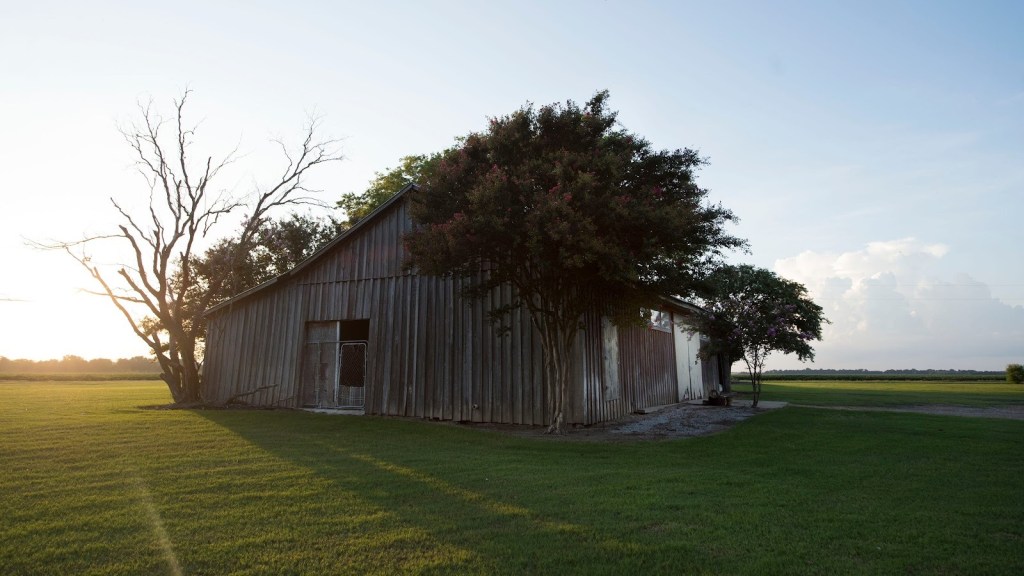
When I reached the barn, the stillness felt different from the store. The site didn’t just carry history – it carried a sense of unbearable weight, and I felt a pit in my stomach. And yes, tears came to my eyes. It was one of the rare moments in travel where curiosity disappears completely and is replaced by reflection.
Returning slowly toward Money, I couldn’t shake the feeling that the land itself carried memory. It felt as though stepping onto that soil stirred echoes that had never completely faded – voices, fear, anger, heartbreak. There was a lingering awareness that for some, this history might feel like something better left unspoken, buried beneath generations of silence and discomfort.
While I stood near the store the first time, another car had slowly pulled into the gravel nearby. A couple stepped out, looking around with the same cautious curiosity I had felt before. We didn’t speak beyond a brief nod, but the acknowledgement brought unexpected comfort. There was reassurance in knowing I wasn’t alone in trying to understand, remember, and pay quiet respect to a place that carries such immense historical weight. It felt like a shared moment of witnessing, even without conversation.
Leaving Money felt far different from arriving. The tension I carried into the town didn’t disappear, but it softened into reflection. The fields and empty roads looked exactly the same as they had when I arrived, yet something inside me had shifted. I realized that some places are not meant to entertain or inspire in the traditional sense. Some places exist to confront you with truth – raw, uncomfortable, and necessary.
As I drove away, I found myself glancing back through the rearview mirror longer than usual, as if part of me wasn’t ready to let the place disappear behind the horizon. There was a quiet realization that visiting historical sites is not simply about learning facts or checking landmarks off a travel list. It is about standing in spaces where human pain once unfolded and allowing yourself to feel its weight without distraction or denial.
Money is barely a blip on a map and not a place that welcomes you with fanfare. Instead, it offers silence – and in that silence, it asks something of you. It asks you to reflect. It asks you to acknowledge that the past is never truly past, especially in places where injustice once walked openly under the same sky.
Long after the place disappeared from view, the stillness followed me. I realized that the ghosts I had quietly feared awakening were never confined to that small patch of Mississippi Delta land. They travel with anyone willing to listen. They linger in thoughts, in questions, and in the quiet moments when history stops feeling distant and starts feeling painfully personal.
And as miles stretched between Money and me, I understood something I hadn’t expected when I began that drive: some places do not want to be visited for closure. Some places exist so that closure never fully arrives – because remembering, however uncomfortable, may be the only way history continues to speak, and the only way we continue to listen.

