
Doctor’s offices, dentists, hospital clinics, service departments, government buildings – they all have their own purpose, but the atmosphere is almost always the same. A quiet, slightly awkward space where a group of strangers sits together, waiting for their turn for something.
And even though nobody ever explains them, waiting rooms seem to operate under a set of unwritten social rules. The first rule is silence. Not complete silence, but a kind of careful quiet. Someone flips through a magazine or laughs at a text. Someone coughs. A chair shifts across the floor. Occasionally, a receptionist speaks softly with someone at the desk.
But for the most part, people instinctively keep their voices down, as if everyone has silently agreed that this isn’t a place for loud conversation.
The second rule is avoiding eye contact.
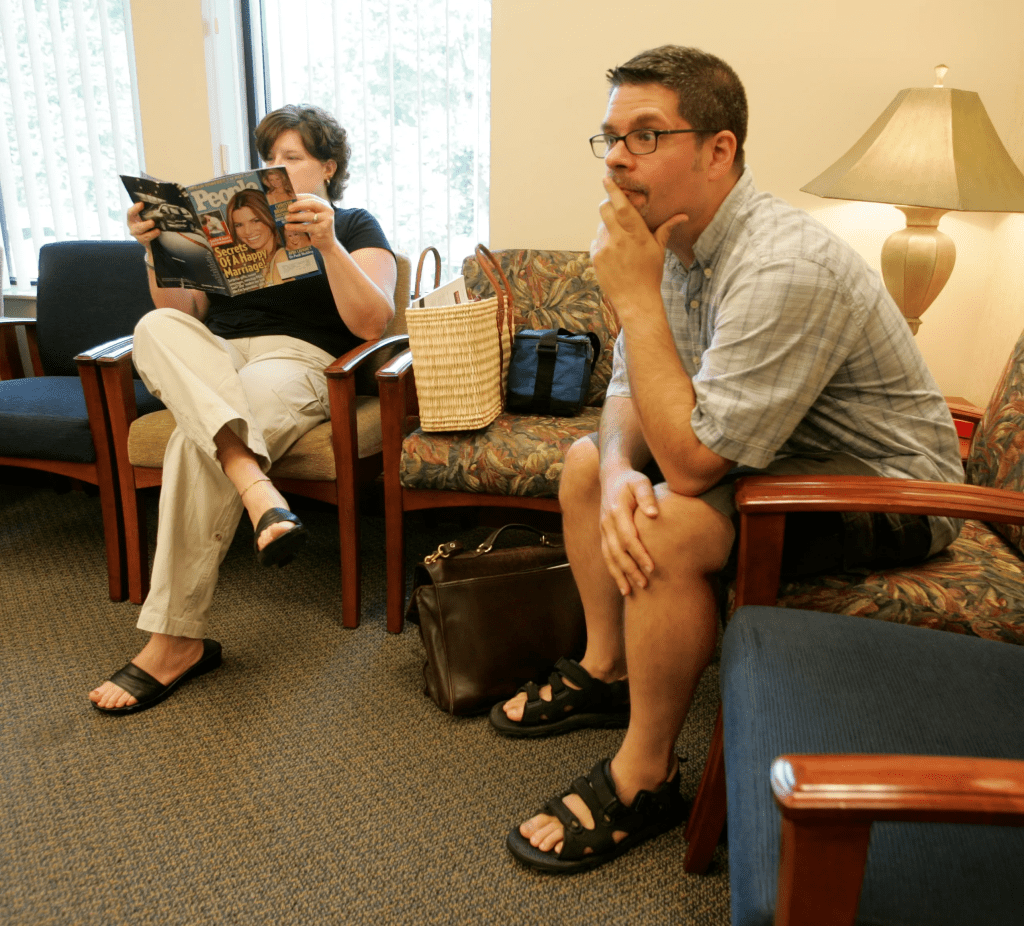
When you first walk in, it’s normal to glance around briefly to see how many people are waiting ahead of you. But once you’ve found a seat, most people suddenly develop a deep interest in their phone, an old magazine, or whatever happens to be on the wall. It’s not that people are unfriendly. It’s just that nobody wants to accidentally start a conversation with a stranger in a waiting room.
Part of that hesitation comes from the fact that no one really knows why anyone else is there. You might be waiting for a routine appointment, while the person across from you could be dealing with something far more serious. In a situation like that, polite silence feels like the safest approach.
Then there’s the unspoken rule about where to sit. If there are ten empty chairs and only two people in the room, everyone instinctively leaves at least one seat between themselves and the next person. No one sits directly beside someone else unless the room is completely full.
It’s the waiting-room version of personal space.
And of course, there’s the phone rule.
Phones are perfectly acceptable in a waiting room, but only if they’re used quietly. Scrolling, reading, and texting are all part of the silent routine. But the moment someone starts a loud phone conversation or plays a loud video, the entire room becomes aware of it. Suddenly, everyone learns about someone’s cousin, their workplace problem, or their dinner plans for the evening.
Heads tilt slightly while a few eyes glance up. The quiet understanding of the room has been interrupted and everyone has the look of, “Turn your phone down!”
What makes waiting rooms interesting is that they’re one of the few places left where strangers sit together without feeling any pressure to interact. Everyone is sharing the same space for a short time, yet each person remains in their own small bubble.
Eventually a name is called. Someone stands up, disappears through a door, and the room quietly returns to its rhythm. Another person walks in, takes a seat, and the unspoken rules begin all over again.
 johnberkovich.com